12) JAPANESE PEOPLE WORK HARD, BUT SLOWLY
Working hours in Japan are from 9 am to 5 pm, but they mostly always stay much longer. Many suffer from karoshi (overwork). If they finish their work before their superiors they are reluctant to leave before them. Also, it's quite common for them to socialise after work. Whatever their job, they do it with great dedication and competency. Surprisingly enough, they are very slow. They don't have holidays like most of us. Instead, they take a few days off work for the two biggest national holidays : New Year (a week plus a few free days) and Golden week (Sakura festival at the beginning of May).
13) EXPENSIVE FLATS AND MANY SINGLE HOUSEHOLDS IN JAPAN
One - person households account for nearly 40 % of the total number of households in Japan. The rent for a 20 - 30 square metre flat is around 500 € plus 250 € for utilities. Strangely, flats are always rented empty, so you have to buy all the furniture and take it with you when moving out. The minimum salary is around 1400 €, minus various taxes. If you want to buy a flat it will cost you around 4350 € per square metre. In Ginza the price of a square metre is staggering 15,000 €. Many people own their own flats and houses.
14) KIMONOS POPULAR WITH YOUNG JAPANESE PEOPLE
Most Japanese people wear Western attire for every day. However, when travelling around Japan, I noticed quite many young people wearing kimonos, especially when visiting shrines and temples for the New Year holidays. They wear kimonos on formal occasions such as weddings, funerals, shrine visits or some other special events.
15) JAPANESE PEOPLE ARE BORN SHINTO AND DIE BUDDHIST
When a Japanese person is born, Shinto rituals are performed, while funerals are mostly Buddhist. They also have Shinto-style marriage rites. In a survey, most Japanese people declared themselves Shinto/Buddhists. Fun fact , in the same survey they claimed they were not religious. (?!) They are usually cremated and their graves are small and unpretentious.
16) WEIRD TOKYO STREET FASHION - BARE LEGS, NEUTRAL COLOURS AND LAYERED CLOTHES
Strangely enough, many Japanese women, especially young girls, wear short skirts on bare legs (6-9 degrees Celsius). Even girls wearing school uniforms (navy mini skirt, white blouse, navy jacket and loafers) had only white socks on. Most Japanese women wear wide, layered clothes in neutral colours, but many have branded bags and nicely done nails.
https://www.style-arena.jp/en/tokyo-streetstyle
17) JAPANESE RECIPE FOR LONGEVITY
18) PHYSICAL EXERCISING WITH RADIO TAISO
Most Japanese people don't do strenuous, high intensity workouts. Yet, they seem very fit and youthful. However, they walk a lot on a daily basis and use public transport (lots of stairs!). Also, every day they do 3-5 minutes of light stretching. At 6.30 every morning (Japanese people get up early in order to enjoy the sunrise) many people throughout Japan tune in to
Radio taiso to do their regular morning exercise.
https://www.radiotaiso.com
FOOD FUN FACTS ABOUT JAPAN
19) EATING AND WALKING IS A BIG NO-NO
Although street food is extremely popular, Japanese people avoid eating while walking, not even an ice cream. Instead, they stop by at the shop or in some side street and eat their food. Some street food shops even provide benches for that purpose.
20) UNIQUE CUSTOM MADE DISHES
When eating in a restaurant, first you pay at the vending machine, get a receipt or some token and wait for a free seat. Then you get a list with the questions about how you want your dish made. For example:
ICHIRAN https://en.ichiran.com/ramen/ a Japanese chain of restaurants specialised in making
ramen and the only of its kind with a Michelin star. The ingredients of the dish are pork broth, meat, soba noodles, vegetables and various condiments. You choose
how much broth, garlic, onion and fat you want. You can also
choose between thin and thick soba noodles and the side dish (fried shrimps, pork belly, oysters...). Usually there is a bowl with raw eggs on the table and a box of nori sheets to help yourself free of charge. I saw many people around me eating rice/ meat/ramen with a raw egg topping, which I found strange!
21) CAT ROBOT RESTAURANT IN NIKKO
In Nikko there is a special restaurant where waiters are mostly replaced by technical gadgets. Once seated, you are left with a tablet to make your order. In case you are not sure how to do it there is a demo on the tablet. After you make your order you wait for a cat robot to deliver it to your table. Then you pat the cat robot on its ear and it leaves. If you are paying with a card you end your order by paying online. If you are paying cash you choose the option PAY AT THE TABLE and wait for the waitress to come. In Japanese culture tips are unacceptable because they think that they are already paid for their work and don't need any extra payment from you.
22) OSAKA IS THE CULINARY CAPITAL OF JAPAN
No foodie should miss the opportunity to try some of the amazing delicacies of the local cuisine. Osaka is full of unique, eclectic and delicious restaurants and street food stands. Some must try mouthwatering local specialities: takoyaki, okonomiyaki and kushikatsu.
23) INDIVIDUALLY PACKED SWEETS AND SHORT EXPIRY DATES
In Japan dessert is usually not eaten as a part of a meal, but with tea. Fun fact, most sweets are individually packed, so it's harder to overdose. Plus, Japanese food has shorter shelf life than in most other countries.
JAPAN EARTHQUAKE TRIVIA
24) 7.6 RICHTER SCALE EARTHQUAKE (1/1/2024) IN TOKYO
During our stay in Tokyo a strong 7.6 magnitude earthquake hit the country. It was some 300 km away from Tokyo and most of us didn't even notice it. However, some people from our group were in the Tokyo Tower (250 m high) at the time and they felt it quite strongly. The uniformed officials informed the visitors about the earthquake safety measures which included closing the lifts and staying away from the windows. They handed out earthquake emergency kits and announced that the engineers would examine the lifts before they could be used again. They said it would take between 1.5 to 2 hours. One and a half hours later the lifts were declared safe for use. At the exit the uniformed staff stood in a line, bowed and apologised for the inconvenience. They returned the money for the tickets and gave them some small souvenirs. To be found only in Japan!
25) JAPANESE EARTHQUAKE-RESISTANT BUILDINGS AND HOUSES MADE OF WOOD
Japan is an earthquake prone country. It is home to about 1,500 earthquakes a year and Japanese people have learned to live with this harsh reality. They have very rigorous earthquake-building standards. Their high-rise buildings have a base made of lead, steel or thick layers of rubber, which allows the foundations of the building to move and minimise the damage. On the other hand, their houses are made of wood, which makes them flexible. Below is a picture of a wooden house under construction.
TOKYO JAPAN FUN FACTS
26) UNPRETENTIOUS IMPERIAL PALACE IN TOKYO
An unassuming little house and the estate surrounding it is the home of the Japanese imperial family, one of the oldest in the world. It is nothing like the royal palaces we see around Europe and most other countries. The palace stands on the site of the former Edo castle. It is closed to the public, but twice a year, in February for His Majesty's birthday and for the New Year, the emperor Naruhito appears on the balcony of the Palace and delivers a speech to the gathered crowd. Only direct male - line males are allowed to ascend the throne, which means that Naruhito will be succeeded by his nephew, not his only daughter princess Aiko. Chrysanthemum is the symbol of the Japanese imperial family. It is featured on the Imperial seal, Japanese passports and the 50-yen coin. The flower also represents longevity.
27) TOKYO UENO PARK ZOO - PANDA AS A LOTTERY PRIZE
The largest and the most important Tokyo park houses many museums, temples, a lake and a zoo. In the sakura season it is a cherry blossom viewing spot with about 1200 cherry trees and many gingko trees. Fun fact, the zoo had a huge panda for a limited period of time (they borrowed it from China), so they organised a lottery for viewing the panda. The number of "winners" was restricted to 2600 people per day.
28) TOKYO SHIBUYA SCRAMBLE CROSSINGS - THE BUSIEST INTERSECTION IN THE WORLD
Tokyo's iconic Shibuya crossing, surrounded by tall skyscrapers with high-tech billboards and bright neon lights, is the world's busiest intersection and a must see attraction in the town. A mind-blowing fact: 3000 people crossing from 8 corners all at once and no one gets trampled! How Japanese - they do everything effectively, with pride and perfection.
29) MODERN JAPAN CITYSCAPE - SIMPLICITY PAIRED WITH AESTHETICS
Not only cleanliness and practicality, but aesthetics is also very important in Japan. Nowhere have I seen so many beautiful buildings like in Tokyo, Osaka and Hiroshima. They really stand out with their distinctive appearance. A unique blend of Japanese minimalism and interesting, elegant forms.
30) HACHIKO STATUE - IN MEMORY OF A FAITHFUL DOG
Hachiko was a Japanese Akita dog who used to wait every day at Shibuya station for his owner to come home from work. After his master had died of a stroke, the dog continued coming to the station every day for 9 years at the same time in hope of seeing his master, until he passed away in 1935. He is a symbol of loyalty and love. Today it's one of Tokyo's must see attractions and a meeting point for many Japanese people.
31) FUNKY HARAJUKU -THE HUB FOR JAPANESE POP CULTURE
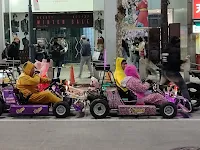
Harajuku is a neighbourhood in Tokyo famous for its quirky street fashion worn (mostly) by young people. They stand out with their unique style, loud colours and provocative design. This hub of the Japanese pop culture was inspired by the American soldiers who came to Japan in 1945 in their western attire.
32) TOKYO MUST VISIT: TeamLab Planets
It's a digital art museum where you walk through virtual reality. You walk through a meadow, pick flowers, listen to the birds, walk through water, you become one with nature - an unforgettable sensory and tactile experience which aims at erasing the boundaries between the body and the artwork. Quo vadis tip: book the tickets online well in advance (24€). Each ticket has an admission time, so there is no big crowd inside once you get there.
33) TOKYO IS CLASSY AND ELEGANT, OSAKA IS MORE UNPRETENTIOUS
In the streets of Osaka I even saw a few cigarette buts and a few bins. Also, the queues were not so strict. Osakans are reputedly less formal and more approachable. Fun fact: some of Japan's top comedians come from the city.
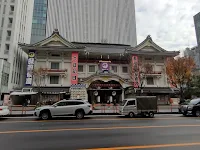
34) KABUKIZA - DIFFERENT PLAYS FOR COMMON PEOPLE AND ARISTOCRACYKabukiza is a traditional Japanese theatre nested among the modern highrise buildings in Ginza. It's a perfect example of the Japanese art of merging historical with modern architecture. In the past there were 2 kinds of plays: kabuki for common people and noh for aristocracy. Kabuki is a unique Japanese art of storytelling through song and dance in elaborate costumes. Noh, on the other hand, was more elegant and intellectual, lasting 6 - 7 hours. There were no words, actors wore masks and used movements to make people reflect on the message of the play. Kabuki is performed every month at Kabukiza Theatre. Today the tickets are not too expensive (4,000 ¥ - 20,000 ¥), but should be bought well in advance.
KYOTO JAPAN FUN FACTS
35) KYOTO WAS SPARED DESTRUCTION IN WW2
Out of respect for its cultural heritage and religious traditions Kyoto was spared destruction during World War II. As a result, the city has preserved most of its historic cultural heritage. The place boasts a number of UNESCO World Heritage temples.

36) KYOTO - CITY WITH THE HIGHEST POPULATION OF WORKING GEISHAS
Geisha is a symbol of Japanese culture. Many people come to Gion, a famous geisha district in the old town, to see them. Fun fact, you stand a better chance of seeing one in an expensive car than walking down the street. Anyway, I didn't see any! In Kyoto geishas are called geiko.
37) GEIKOS AND MAIKOS: HOW TO TELL THEM APART
The main differences between geiko and maiko are their age, appearance and skills. MAIKO (a dancing child) is between 15 and 20 years old and lives with a senior geisha. She can't have a cell phone, carry money or have a boyfriend. Maikos don't speak much, but mostly nod and smile. The colourful kimonos with a red collar and high sandals with little bells should make up for the lack of their skills. Their natural hair is nicely done and they wear red lipstick only on the lower lip. GEIKO (an art person) is over 20 years old, lives in a separate house and is more independent. They are skilled in making conversations, singing, dancing and playing shamisen. Hence, they wear less colourful kimonos with a white collar and low sandals. Their completely white faces make them look better in the dark.
38) IMPRESSIVE BAMBOO FOREST IN KYOTO - WHERE THE WIND SINGS
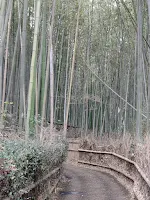
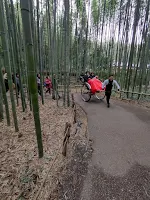
In Arashiyama (Kyoto) there is a thick forest of bamboo trees with winding lanes for visitors and rickshaw people. Buddhist temples are often built near bamboo forests because bamboo symbolises strength. Most bamboo trees in this forest belong to the moso bamboo family, a giant species originating from China and Taiwan. They are also quite common in Japan. Fun fact: when the wind blows these bamboo trees produce soft, soothing music. There was no wind at the time of my visit, so I didn't hear any music. Anyway, it's a part of 100 soundscapes of Japan. Another fun fact: bamboo trees are self-sustaining. It is the fastest growing plant on the planet and it doesn't need replanting after being cut.
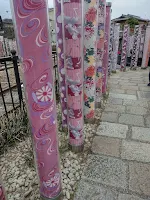
39) UNIQUE KIMONO FOREST IN ARASHIYAMA
No, it's not a real forest, but a collection of 600 pillars covered with acrylic fibre featuring 32 different patterns of kimonos. Many people come here to pray. There is led light inside the pillars, so apparently they look even better at dusk. Definitely, one of a kind Japanese experience!
FUN FACTS ABOUT OSAKA, NARA, NIKKO AND FUJI
40) OSAKA IS A GATEWAY TO THE WEST
A wide range of accommodation facilities, from luxurious hotels and traditional ryokans to budget friendly capsule hotels and hostels makes Osaka a popular gateway. With your JR pass it takes about 30 minutes from Osaka to Kyoto by a commuter train with frequent departures and by bullet train only 15 minutes.
41) BOWING JAPANESE DEER
In Nara, Japan's first capital, there is a whole complex of temples and a national park famous for its deer. There are over 1400 deer roaming around freely. For about 1€ you can buy a small pack of deer crackers to hand feed them. They are very tame and seem to be used to socialising with people. Fun fact, after they eat your cracker they bow and let you pat them. They will follow you as long as you feed them, but when you show them your empty hands they leave. So, not only people, but animals as well are gentle, kind and grateful in Japan!
42) TOSHOGU SHRINE IN NIKKO: AN UNUSUAL BLEND OF SHINTO AND BUDDHIST ELEMENTS
The shrine is a complex of about a dozen shrines and torii gates set in a forest. The funny thing is that it contains both Shinto (vermilion torii gates, altars, sacred paths to the places of worship) and Buddhist elements (images of Buddha and sacred texts). Nature plays an important part in Shintoism and many shrines are located in beautiful natural settings. In Shinto, water and waterfalls are considered sacred, so you can see people washing their hands or standing under waterfalls to purify themselves. Samurai sit under a (cold) waterfall as a form of meditation and spiritual cleaning.
43) THREE WISE MONKEYS FROM NIKKO
Toshogu shrine in Nikko is also famous for the carved images of three wise monkeys who "see no evil, speak no evil and hear no evil". It's based on the Confucionist teaching to refrain from evil with all your senses.
FUJI - JAPANESE JERUSALEM
Fuji is the tallest mountain in Japan and one of the most dangerous active volcanoes in the world. It is one of the most iconic and visited places in the country. Many consider it a sacred mountain and it's a popular pilgrimage site. There are hiking tours from Tokyo to Fuji, but New Year is the time when many Japanese pilgrims visit the mountain to pray there and purify themselves of sins. The Shinto believe that Mount Fuji is the home of the gods. Quo vadis tip: book the tickets in advance, especially if you plan your visit for the NewYear!
https://shinkansen-ticket.com/collections/mtfuji Since it is worshipped by Shinto, Buddhists and Confucionists, it is called Japanese Jerusalem. Located about 100 km west of Tokyo in clear weather it can be seen from Tokyo Tower or Tokyo Skytree (also book tickets in advance!). On our way from Tokyo to Osaka, after about 40 minutes of train ride with the bullet train, you can clearly see the mountain if the weather is fair (we were lucky!).

SOME MORE MIND-BLOWING FACTS ABOUT JAPAN
45) NEW YEAR IN JAPAN - NO FIREWORKS AND NO COUNTDOWN
Japanese people don't celebrate New Year the way we do. No countdown, champagne, fireworks, singing, drinking or having fun. In Japan it's more of a spiritual affair. Something like Christmas here. If they don't stay at home with their family, they go to the nearby temple like we did. The great bell of the temple rings 108 times, the number of worldly desires. Japanese people believe they cause pain and suffering, so they want to get rid of them and start the year with a fresh, clean start. In front of the temple there is a bonfire where they burn small papers with their wishes for the next year. At midnight they release white balloons and lanterns, the letter symbolising good luck and happiness.
(New Year at the Tokyo Zojo-ji temple)
46) JAPANESE STATUES OF UNBORN CHILDREN
Another thing that makes Japan different from the rest of the world are the statues of unborn children. At some temples there are a few dozens of statues of children with red caps and bibs lined along the path to the temple. They represent guardian angels of aborted and miscarried babies. The cap should provide them with warmth and love. Occasionally they make offerings for their souls. Touching statues is strictly forbidden!
47) JAPANESE PET CAFES - ENJOY YOUR COFFEE/TEA WITH PETS
Smart Japanese have come up with a solution how to help people who like pets but don't want to take on the obligation of taking care of them. Or, like many locals, can't keep pets in their confined urban dwellings. One of the most typical Japanese things are cafes where paying customers can indulge in their daily cuddle with a pet (dog or cat) and a cup of green tea or coffee. I don't remember having seen any stray cats. Probably because they collect them and fix them up so they can earn for their food and shelter.








Comments
Post a Comment